
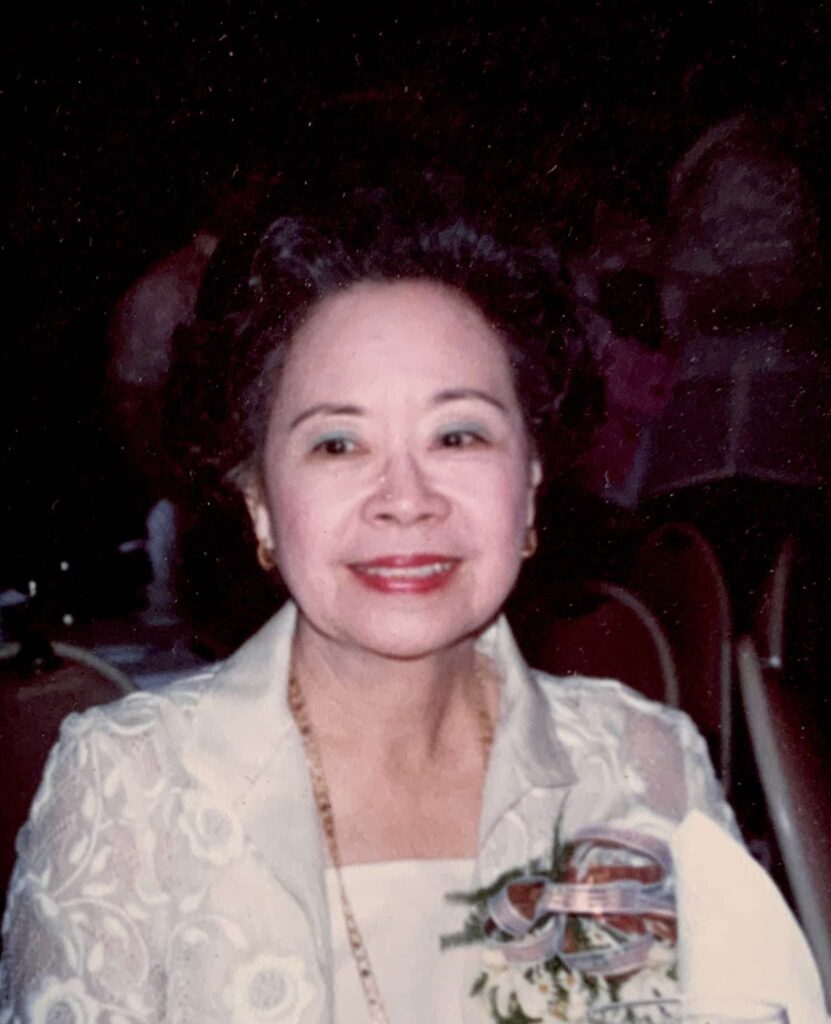
Justice Ameurfina M. Herrera | Grand Daughter of Emilio Famy Aguinaldo
The first order that he issued was “let us all unite so we can work together and put an end to slavery.” “Know thyself” was a trait that he carried. He knew his limitations and so, sought and appointed people with higher intellect and broader experience to help him in his acts of governance. Thus, in his cabinet and for other positions as well, he appointed educated and capable people, like Baldomero Aguinaldo, as Secretary of War, Felipe Buencamino, as Secretary of Development, and Gregorio Araneta, as Secretary of Justice, to mention a few.”
“History also records that when summoned to attend the Tejeros Convention because of his election as President of the national government, he refused to leave the battlefield because he felt that he could not abandon the lines to the enemy until his brother Crispulo Aguinaldo assured him that the enemy would win only over his dead body.
“Another thing accomplished was that he was the first soldier. He was the first President of the Philippine Republic. He and his gallant leaders were responsible for the establishment of the first constitutional republic founded on democratic principles. That inspired other Asian countries, also under colonial rule, to work for their own independence. He even reached out to the Muslims in Mindanao and assured them that the belief of all Filipinos would be respected. His concept of a nation included both Christians and Muslims. The Filipino flag and the national anthem were both created under his direction and are his additional priceless contributions.”
I have known Lolo Aguinaldo as a grandchild and have no doubt about his love of country, his integrity, and his deep concern for the Association of Veterans of the Revolution for whom he worked hard for years in order to obtain pensions and benefits for them in acknowledgment of their service to the nation.
He left timeless legacies to his countrymen, namely: 1. the Philippine National Flag, with the symbolization of its colors, of its three stars, and of the eight rays of the rising sun; 2. the Philippine National Anthem, authored by Julian Felipe as ordered by Aguinaldo; and 3. the First Philippine Republic, which was the first republic in Asia.
On 31 October 1896, he issued a Proclamation that introduced a concept of government through the creation of a central committee to oversee the conduct of the revolution, and municipal committees that were to administer the governments of the towns. Furthermore, each municipal committee was to have a delegate to a body intended to be a revolutionary congress. This was Aguinaldo’s own sense of national administration.”
“On 6 July 1897, he issued a Proclamation in Spanish rallying all Filipinos to join the struggle for a “universal human right,” the right to be free. In the same Proclamation, he appealed to Asian, American and European support, fully cognizant of the importance of support from the outside world. Aguinaldo, too, was instrumental in the unanimous adoption of a Provisional Constitution of the Republic of Filipinas 1 November 1897 as Biyak-na-Bato motivated by the basic concern on how to progress beyond the developments in Tejeros.
For after Tejeros, no constitution was adopted nor were there provisions on the nature of the government. But it was General Aguinaldo who foresaw the need for a formal organic act in his 31 October 1896 Proclamation. At Biyak-na-Bato, he took the lead in setting up a formal structure of government.”
“Again, after formally declaring the victory of the revolution on 15 September 1898, his important counsel was that military victory was not the only goal but that the Filipinos should be able to govern themselves with a system that would meet the standards of the civilized world.” Free exercise of self-government had to accompany that victory, he stressed. That self-government was evident, thereafter, in both national and local levels.”
“In addition, in his opening message to the Malolos Congress which convened on the same date, 15 September 1898, General Aguinaldo addressed the problem of peace and the need to formulate a fundamental law that would express the aspirations of the country. The Malolos Constitution was officially promulgated and the First Philippine Republic was proclaimed and inaugurated on 23 January 1899. Amendments for a strong executive power, as proposed by General Aguinaldo, were accepted because of the hovering dark shadow of American occupation.”
“I can never forget how proudly he carried the Philippine Flag during the Independence Day Parade in 1946. When President Macapagal changed the Independence Day from 4 July to 12 June, he insisted in leaving the hospital where he was then confined and take him in his rayadillo uniform to the Luneta Grandstand for the festivities.”