
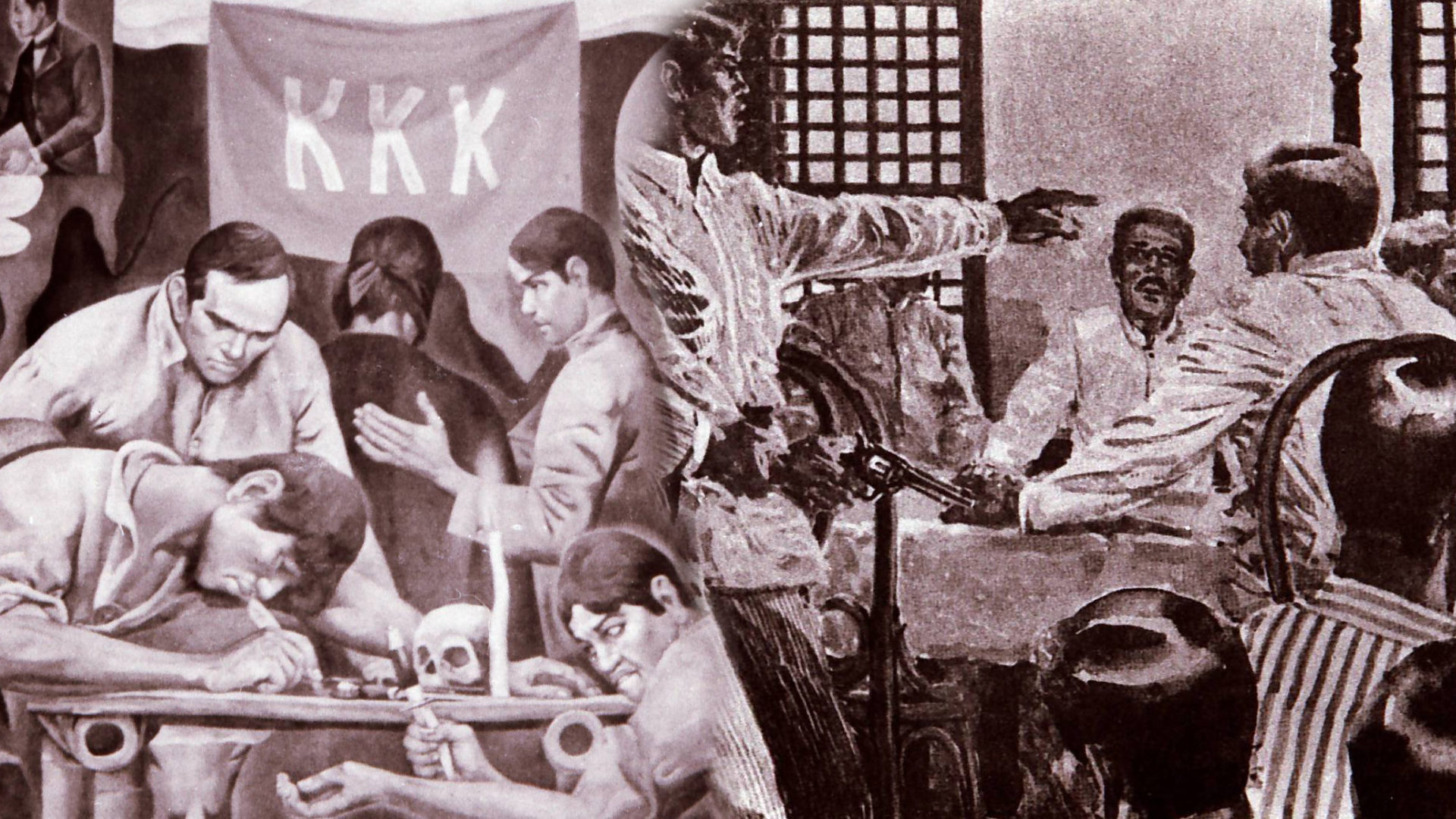
Jose Alejandrino, 1949
Among the generals who were under the immediate orders of Luna was General Mascardo whom he entrusted with the mission of guarding the coast of Manila Bay on the Pampanga side in order to impede as much as possible an enemy landing, or, at least, to delay it so that we would not find ourselves outflanked in Bagbag and Kalumpit. This general, on various occasions, absented himself from his post without permission, in disregard of the instructions of the General-in-Chief, believing undoubtedly that with the protection that he enjoyed from the Captain General, Luna would not attempt to impose upon him a punishment. In this case, however, he was mistaken because the Luna of Kalumpit was not the Luna of Kalookan. The admonitions of Luna were answered with insolence and Mascardo’s threats to rebel in case Luna should impose upon him any punishment reached the ears of Luna. Things took such a serious turn that Luna decided to make said general toe the line, resorting to force if necessary. For this purpose he took with himself some companies of the garrison not on duty and with then he proceeded to the place where the general in question was. Everybody feared a bloody conflict, so much so that the inhabitants of the towns near the place where General Mascardo was stationed went out en masse to beg Luna to desist from his plans. Luna, however, answered that discipline was a question of life or death for our troops and that, unless Mascardo recognized his authority and submitted to his orders, he would carry things to the last extreme. Fortunately, however, the incident was settled in a satisfactory manner because General Mascardo had enough prudence to recognize that he was in error and he abided publicly by the orders of Luna, admitting his fault.
This act of Luna created severe criticisms against him, accusing him of having abandoned his post in the face of the enemy and risking a serious conflict just so to satisfy his personal pride. To those, however, who to this day maintain these criticisms I anser that they should take into account the circumstances in which Luna found himself then. It was absolutely necessary that he impose the most severe discipline if he wanted to remain in the post which he occupied and to occupy it properly. I have no doubt that this event influenced later the plot to kill him. (Alejandrino, pp. 135-136)
Luna wanted to proceed strongly against some of these persons for a general punishment. He said that it was necessary to shoot an autonomist, a coward, a recalcitrant, and a thief, and he wanted that the victims should be those occupying very high positions in order that the punishment be exemplary. But he never wanted to replace Aguinaldo, and even in intimate conversations he told me that nobody had the countrywide prestige earned by Aguinaldo and that no one else could control the majority of our generals. Even when he considered that the President, because of his weakness and partiality towards others was an obstacle to the disciplining of the army and the unity of our pro-independence policy, was an evil, he was, nevertheless, a necessary evil. (Alejandrino, p. 142)
Now I shall deal with the most lamentable and disagreeable subject-the death of Luna. The first link in the chain of events which culminated in the death of General Luna was forged in Kalookan during the first battles in which he insulted and threatened to shoot a colonel and a lieutenant colonel from Nueva Ecija who had retreated from the line during the fighting abandoning their men. The second link was the disarming of a company of Kabite soldiers who formed part of the Presidential Guard of Kalumpit. The third is when by means of force he compelled General Mascardo to recognize his authority as General-in-Chief, thereby creating a deep enmity between them. The fourth was the violent scene involving Buencamino, Paterno and Luna in the Presidential Office in Kabanatuan. The fifth is when an influential General came to know that he was being threatened by Luna for his continuous acts of insubordination. The sixth was the reasoned refusal of Luna to send some batallions of the soldiers he had organized in Kalumpit to Nueva Ecija as General Aguinaldo wanted. But the order of arrest against Paterno and Buencamino, the alleged assassination of Joaquin Buencamino, and the trial of Arguelles were the seventh and last link which completed the iron chain that ended the heroic life of the regretted Lieutenant General of the Army of the Republic. (Alejandrino, pp. 149-150)